Leading by Example: Why Supervisors Are the Make-or-Break Point in Construction Safety
Leading by Example: Why Supervisors Are the Make-or-Break Point in Construction Safety
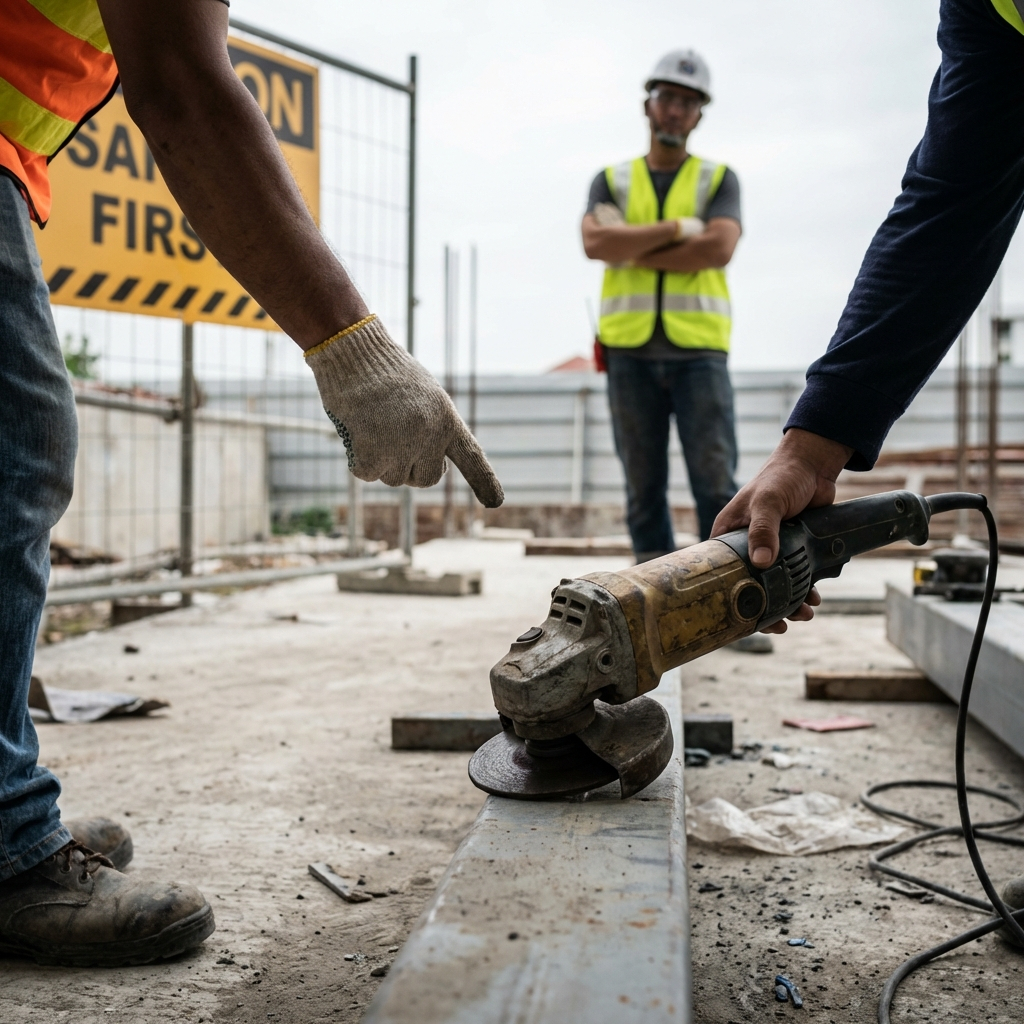
A Construction Manager was walking through the site when he noticed a contractor's foreman standing by a handrail, watching his crew work. The crew was grinding metal with a grinder that had no handle. There was no fire extinguisher in the area. A coworker stood in the line of fire, sparks shooting toward him. The foreman just watched.
This moment shows a central problem in construction safety. The foreman wasn't absent. He wasn't distracted. He was right there, watching his crew work in conditions that could cause serious injury or death, and he did nothing. The Construction Manager had to step in, explaining that the foreman needed to lead by example and keep the site standard. But the damage was done. The crew had learned their real lesson: these hazards don't matter enough to stop work.
Supervisors are the keystone holding safety programs together. Safety professionals can coach, guide, and mentor all they want. They can write procedures, conduct training sessions, and build elaborate safety management systems. But if the supervisor ignores hazardous behavior, it's all wasted effort. The crew watches the supervisor, observes what gets attention and what doesn't, and adjusts their behavior accordingly.
Why Frontline Supervisors Are Where Prevention Actually Happens
Construction sites operate under a simple truth: consequences don't wait for perfect conditions. They happen in seconds, right where the work's happening, under production pressure. Frontline supervisors directly influence worker behavior at the point where consequences actually occur. Policies don't prevent incidents. Training programs don't stop unsafe acts. The supervisor's decision to step in or look away determines whether someone gets hurt.
The field has built an entire industry around upstream systems: safety departments, management programs, regulatory compliance frameworks, cultural initiatives. These systems matter, but actual prevention is the behavioral choice made by both the supervisor and the worker in the seconds before someone steps into danger. Everything else either supports that moment or it doesn't matter. In the scenario above, the foreman had all the upstream support he needed. The site had standards. The Prime Contractor had a safety program. The hazards were visible and well-known. What failed was accountability at the critical moment. The foreman didn't stop the work. He didn't coach the crew. He didn't model the standard. The workers chose to proceed with unsafe conditions. He stood there and watched, and in doing so, he reinforced that production speed matters more than prevention. The workers had their own choice to make, and they made it based partly on what the foreman allowed.
How Supervisory Violations Spread Through Crews
When supervisors bend safety procedures, they don't just create isolated incidents. They create patterns that others follow. Supervisors often face pressure to meet productivity demands, and some bend safety procedures to complete jobs on time. Safety violations can become powerful examples that inform workers' perspectives on the relationship between safety and production.
The crew in this scenario learned something that day. They learned that grinding without a handle is acceptable if it keeps work moving. They learned that standing in the line of fire is tolerable if the foreman doesn't intervene. They learned that the real standard isn't what's written in the procedure, it's what the foreman allows to happen. This learning spreads. Other crews observe. New workers get onboarded into what actually happens on site. The written standard becomes irrelevant because the enforced standard is something else entirely. This creates a problem that safety professionals can't solve from the outside. You can run more training. You can rewrite procedures. You can increase audits and inspections. But if the supervisor doesn't enforce the standard in the moment, under pressure, when it's inconvenient, the crew will default to what they've seen work: cut corners, move fast, and hope nothing bad happens.
Competence Precedes Enforcement
The foreman in this scenario showed a clear failure in leadership. Whether he saw the hazards or not, he took no action. Recognizing hazards is one skill. Stopping work under production pressure is another. Coaching a crew to fix unsafe conditions without creating resentment is a third. Too many supervisors get full responsibility for prevention without training in how to maintain standards under pressure.
Organizations assign supervisors full responsibility for crew safety, then give them minimal training in the leadership skills needed for high-pressure accountability. The supervisor's expected to balance production speed with harm prevention, manage crew dynamics, enforce standards consistently, and make real-time judgment calls about acceptable risk. This is skilled leadership work. It requires practice and training, not just knowing the procedures. The Construction Manager stepping in was necessary, but it showed a deeper gap. The foreman needed leadership training. He needed practice stopping work and coaching crews through corrections. He needed backing from the organization that his accountability decisions would be supported even when they slowed production. Without this training, the next scenario will produce the same outcome.
What Leading by Example Actually Requires
Leading by example isn't about being visible or being present. The foreman was present. He was watching. Leading by example means enforcing the standard when it's inconvenient, when production's behind schedule, when the crew pushes back, when stopping work creates friction. It means the supervisor's choices under pressure match what the company says it expects.
Here's what this looks like in practice. When the supervisor sees a grinder without a handle, work stops. No discussion about whether it's almost done or just this one time. The standard's the standard. Stopping work isn't enough though. The supervisor explains why the condition's unacceptable, what the correct approach looks like, and makes sure the crew understands the reasoning. This builds competence, not just compliance. The supervisor models the behavior they expect. If the supervisor takes shortcuts, the crew will too. If the supervisor wears PPE inconsistently, the crew will too. If the supervisor treats safety conversations as box-checking exercises, the crew will too. Behavioral modeling's the most powerful teaching tool on a construction site.
The real test isn't when conditions are calm. It's when the schedule's tight, when the client's watching, when the crew's frustrated. If the standard bends under pressure, it's not a standard, it's a suggestion. When a worker stops unsafe work and the supervisor undermines them, you've just taught the entire crew that speaking up creates problems. Supervisors need to reinforce that stopping work for safety reasons is always the right call.
The Structural Reality Construction Faces
Construction operates under continuous physical threat. In 2023, construction fatalities accounted for 32% of all workplace fatalities in Canada even though construction workers represent only 5% of the employed workforce. These aren't abstract risks. They're irreversible consequences that happen when frontline accountability fails.
The statistics reflect a simple reality: supervisors are given the responsibility to prevent harm, but too often without the leadership training to fulfill that responsibility under pressure. The foreman in this scenario had everything he needed. The standards existed. The hazards were visible. He had the authority to stop work. What he lacked was the leadership competence to intervene. It's a leadership failure that organizations need to address through proper training and backing.
What Organizations Should Consider Doing Differently
Organizations should consider investing in frontline supervisor training with the same effort they invest in upstream systems. This means training supervisors in leadership, not just teaching them procedures. It means helping them understand their legal obligations under Canadian occupational health and safety law. It means backing supervisors when they stop work for safety reasons, even when it creates production delays. It means making uncomfortable decisions.
Classroom training on procedures isn't enough. Supervisors need leadership training that builds their capacity to manage crews under production pressure, stop work when necessary, coach through corrections, and maintain standards when it's inconvenient. They need to understand what the law requires of them as supervisors in Canada. This requires hands-on leadership development, not just information transfer. When a supervisor stops work, management needs to support that decision publicly and immediately. If the crew sees that accountability creates problems for the supervisor, they've learned that accountability's optional. Company backing needs to be automatic and visible.
Supervisors can't be held accountable for outcomes they can't control. If they lack authority to stop work, change schedules, or refuse unsafe tasks, they can't be held accountable for crew safety. Accountability and authority need to line up at the frontline. Promoting someone to supervisor and giving them responsibility for crew safety without training them in leadership and their legal obligations sets them up to fail. Leadership training needs to come before responsibility assignment.
Where This Leads
The Construction Manager stepping in with the contractor's foreman was necessary, but it addressed a symptom, not the root cause. The foreman needed more than a conversation about expectations. He needed training, company backing, and practice in accountability under real conditions. The crew needed to see that the standard holds no matter the production pressure.
Prevention doesn't happen in policies, programs, or safety departments. It happens in the seconds before a worker steps into danger, when the supervisor decides to step in or look away. Everything else is preparation for that moment. Organizations that invest in frontline supervisor training with the same effort they invest in upstream systems will see different outcomes. Organizations that keep putting expertise at levels far from where consequences happen will keep seeing the same failures repeat. The foreman was just watching. That's the problem. Supervisors can't just watch. They need to engage, coach, model, and maintain standards under pressure. That's where prevention lives. That's where harm gets stopped before it happens. That's the work.
What do you think? How are you developing your frontline supervisors?