Why Micro Breaks Make You Better at Your Job
Why Micro Breaks Make You Better at Your Job
Everyone shares responsibility for preventing incidents, from leadership to supervision to workers on the ground. That includes workers being aware of their own limitations and supervisors monitoring their crews for signs of fatigue. Recovery is a practical part of that shared accountability. Micro breaks aren't a luxury or a wellness perk. They're a prevention tool that maintains the focus workers need to spot hazards and make critical decisions under real conditions.
What Happens to Your Brain Under Continuous Work
You're making critical decisions under production pressure, at times with incomplete information and physical fatigue building up. Research published in PMC shows that fatigue reduces your reaction time, lowers your productivity, and increases decision errors. In construction specifically, physical fatigue impacts your ability to process hazard information. When your awareness of what's around you drops, incidents follow.
Here's what the research shows: a study in Safety Science found that construction workers identified only 57% of fatal-four hazards and 18% of non-fatal-four hazards even under normal conditions. Now add the fatigue you're carrying six hours into a shift. Add production pressure. Add the reality that you're expected to stay perfectly alert with minimal recovery time.
This isn't a training problem or a willpower issue. It's a focus problem. Your brain cannot stay perfectly focused forever. Your ability to stay alert gets worse over time, causing your mind to wander, your performance to drop, and fatigue to set in. This matters because your job depends on staying focused to spot rare but critical events before they become incidents.
How Micro Breaks Restore Your Performance
Micro breaks work because they help preserve the focus you need to spot hazards and make quick decisions. A 2022 review in PLOS ONE pooled 22 studies covering 2,335 participants and found small but statistically significant effects: micro breaks reduced fatigue and preserved vigor. The effect on task performance was less conclusive, though the data suggested a trend toward improvement as break length increased.
The pattern is clear: active micro breaks of 2-3 minutes for every 30 minutes of work decrease muscle and joint discomfort, improve your heart health markers, and provide relief from fatigue and stress. Field research by NIOSH found that adding micro breaks reduced discomfort and eye strain without lowering productivity. You're not sacrificing output. You're keeping your ability to produce quality work safely throughout your entire shift.
The gap I've seen on sites is this: structured recovery time isn't built into the work schedule. What's missing isn't more safety documentation. It's the actual implementation of scheduled micro breaks during shifts when fatigue is actively building and decision-making ability is dropping.
What Works: Practical Break Strategies You Can Use
Time-Based Recovery Intervals
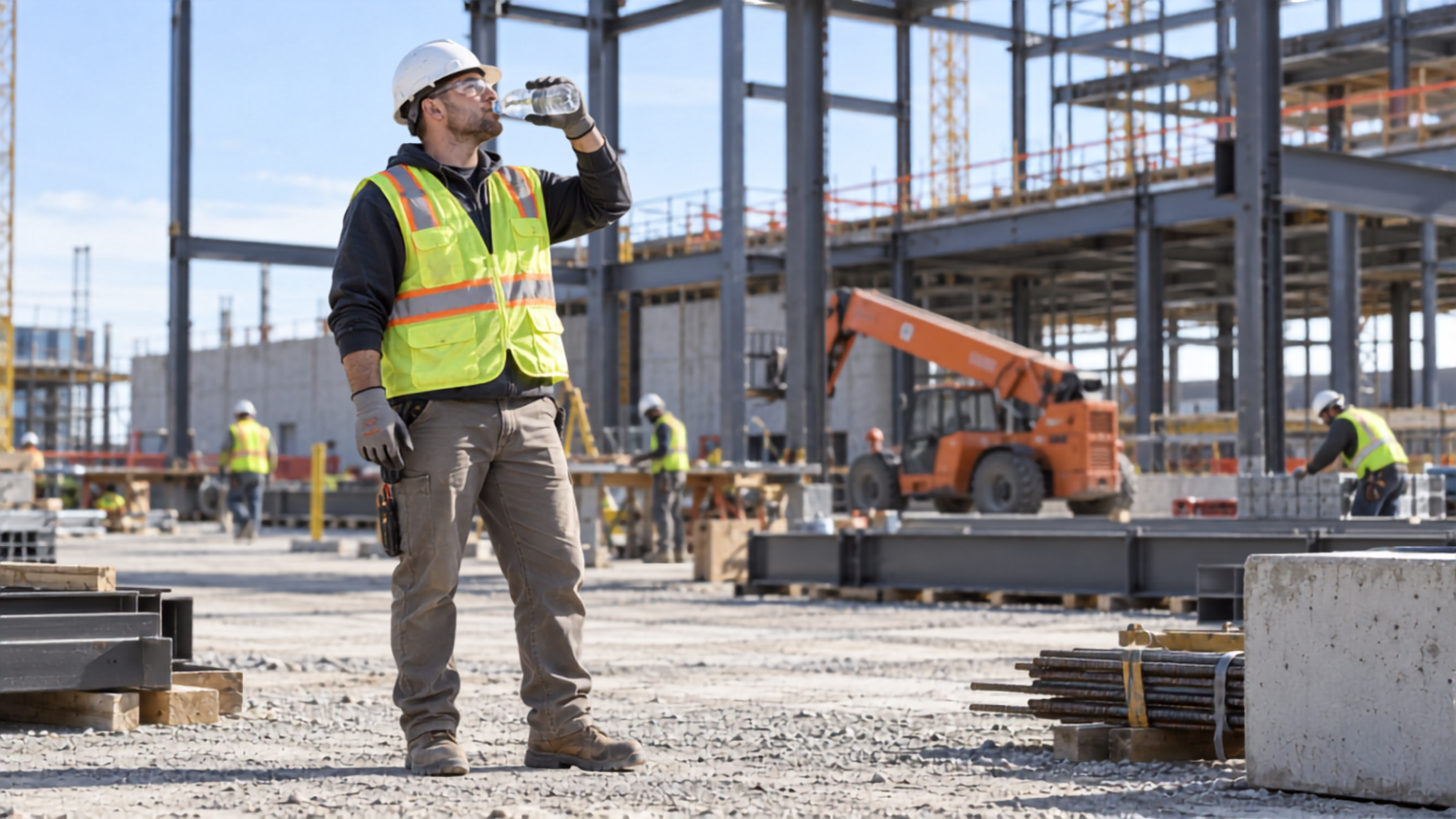
In construction, the 20/20/20 rule is effective for breaking out of autopilot: every 20 minutes, take 20 seconds to look 20 feet around you. This resets your attention, but it isn't actual recovery. Industry best practices often cite a 15-to-30-second rest taken every 30 to 60 minutes as the standard micro break. You stop what you're doing, let tense muscles relax, stretch if it helps, hydrate, and give your mind a brief rest from the task. That's the core tool. Combining it with the 20/20/20 attention check creates a layered approach: frequent visual scans to stay situationally aware, plus regular short pauses to reduce physical and mental tension before it builds to the point where your performance starts to slip.
Staying sharp through a full shift takes more than intention. Building in short, consistent recovery keeps physical tension and mental fatigue from accumulating to the point where hazard recognition starts to slip.
Different Types of Recovery
Not all breaks restore your attention equally. Effective micro break strategies use different recovery types suited to the work: physical movement like stretching or shifting your posture, visual rest by looking away from your immediate work area and scanning the surrounding site, and a brief mental pause where you step back from the task for a moment before returning to it. These are individual, seconds-long actions that fit within the 15-to-30-second window.
The structure switches between active and passive recovery. If you're working at heights, you need different recovery than if you're operating heavy equipment. The key is matching the recovery type to the specific physical and mental demands of what you're doing.
Strategic Break Timing
Placing micro breaks at natural transition points creates mental closure and reduces the mental effort when you switch tasks. Between meetings, after completing a task segment, or when switching between different types of work. This isn't about interrupting your flow. It's about recognizing that strong performance in high-hazard work requires staying alert, not unbroken concentration that slowly gets worse.
Micro Breaks Within Your Shift Structure
It's also worth distinguishing micro breaks from the scheduled rest breaks built into your shift. Those serve a different recovery function and operate on a different timescale. Micro breaks fit in between them, not as a replacement for them.
Micro breaks are one component of fatigue management. They don't replace adequate sleep, employer-provided rest periods, appropriate workloads, or proper hazard controls. When those other pieces are in place, micro breaks complement them effectively.
What You're Risking Without Recovery
Fatigue costs you more than just feeling tired. The National Safety Council estimates that approximately 13% of workplace injuries can be attributed to sleep problems. According to OSHA, working 12 hours per day is associated with a 37% increased risk of injury. Those are two different measures: one reflects how often fatigue contributes to incidents overall, the other reflects the elevated injury risk that comes specifically with extended shift length. Both matter on a construction site. Workers who are both physically and mentally exhausted find it difficult to remain alert and are more likely to be injured or cause harm, particularly when operating machinery.