Inattentional Blindness: A Hidden Risk on Every Site
Inattentional Blindness: A Hidden Risk on Every Site
You drive home from work on the same route you've taken a thousand times. You pull into your driveway and realize you don't remember the last ten minutes of the drive. The turns, the stops, the other vehicles—all of it happened, but your brain was somewhere else.
That's not a memory problem. That's your brain running on autopilot, and it happens on construction sites every day. Known as inattentional blindness, it contributes to 50% of safety failures in construction. Crews aren't ignoring hazards because they don't care. They're missing hazards because their brains are wired to filter out anything that doesn't match what they're focused on right now.
The Gorilla in the Room
Back in 1999, researchers Simons and Chabris ran an experiment that changed how we understand attention. They showed people a video of two teams passing basketballs and asked them to count the passes. Simple task. But halfway through the video, someone in a gorilla suit walked right through the middle of the game, stopped, beat their chest, and walked off.
Half the people watching never saw the gorilla. Not because they weren't paying attention—they were focused on counting passes. Their brains decided the gorilla wasn't important to the task, so it got filtered out. That's inattentional blindness in action.
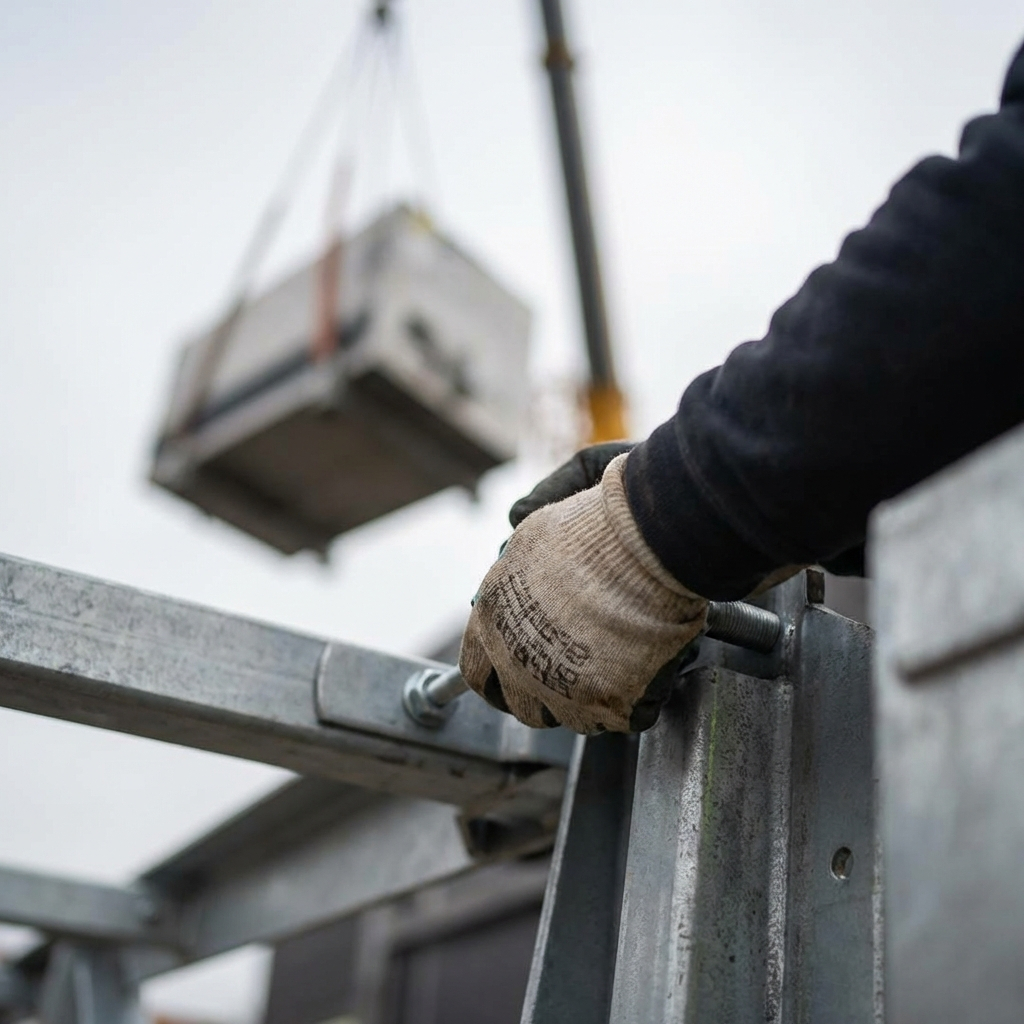
Now think about your millwright focused on aligning a coupling, or your scaffolder building the next level. Their brains are doing the same thing. They're so locked into the task that the overhead load swinging ten feet away, the frayed tagline, or the unstable footing doesn't register. It's not incompetence. It's how human attention works under task focus.
Experience Makes It Worse
You'd think your experienced workers would be better at spotting hazards. They've been on site for years. They've seen it all. But research shows the opposite. Experience increases vulnerability to inattentional blindness.
Here's why. When you do the same task hundreds of times without incident, your brain builds a pattern. It tells you what to expect and what to ignore. Your experienced millwright has aligned that coupling so many times that his brain stops looking for changes. It assumes everything will be the same as last time. That assumption creates a blind spot, and that's where the hazard lives.
I've watched this play out on major projects. The guy with twenty years on the job misses the obvious hazard because his brain is running the routine, not watching the environment. The newer worker, still uncertain and looking around constantly, catches it. Being good at your job isn't just about time on site. It's about making trained decisions under pressure, and that requires deliberate practice, not just repetition.
Autopilot Kills
The Federal Aviation Administration investigated an Eastern Airlines crash where the plane went down in clear weather. The crew was focused on a red light in the cockpit. They didn't notice the autopilot had turned off and the plane was slowly going down. By the time they realized what was happening, it was too late. Trained professionals, high-risk environment, total focus on the wrong thing. Mind wandering and tunnel vision contribute to driving accidents, plane crashes, and medical errors. It's not a training problem. It's a human brain problem.
On your site, autopilot shows up differently. Your crew walks the same path to the same work area every morning. They rig the same loads, use the same tools, follow the same steps. Their brains shift into pattern mode. When something changes—a new obstacle, a shifted load, a different crew working nearby—their brains don't flag it because they're not actively looking. They're just doing the routine.
That's the gap. Your written procedures assume constant attention. Your hazard assessments assume workers are watching everything in real time. But the human brain doesn't work that way. It saves energy by making repetitive tasks automatic, and that automation creates blind spots.
The 20-20-20 Rule
You can't eliminate inattentional blindness, but you can interrupt it. The 20-20-20 rule gives you a simple behavioral tool to reset attention. Every 20 minutes, stop what you're doing. Look at something 20 feet away for 20 seconds. That's it.
This rule was originally developed to reduce eye strain for people staring at screens all day, but it works for construction sites because it forces a break in the task focus. When your brain shifts from the immediate task to looking at the bigger environment, it turns conscious thinking back on. You're no longer running on autopilot. You're looking again.
I've seen crews implement this on high-hazard work. Set a timer. Every 20 minutes, everyone stops, looks around, and resets. It sounds simple, and it is. But simple doesn't mean easy. Your crew has to be trained to do it, and your supervisors have to enforce it. If you treat it as optional, it won't happen. Production pressure will override it every time.
Training the Execution Layer
Here's the part most sites miss. You can't just tell your crew about inattentional blindness and expect behavior to change. Awareness doesn't build skill. You have to train your workers to recognize when they're in autopilot mode and give them the tools to stop it.
That means your frontline supervisors need to coach this behavior every day. They need to show it, support it, and step in when they see someone locked into a task and missing what's around them. It's not a toolbox talk. It's building a habit through practice under real conditions.
Your crew needs to understand that their brains will lie to them. They'll miss the obvious hazard because their attention is somewhere else. That's not a character flaw. It's biology. But once they know it's happening, they can build the habit of resetting their attention before it costs them.
What This Means for Your Site
Inattentional blindness isn't going away. You can't train it out of people, and you can't policy it into submission. But you can build systems that account for it. The 20-20-20 rule is one tool. Regular environmental scans are another. Peer checks before high-risk tasks. Supervisor interventions when someone is deep in task focus.
The key is recognizing that prevention happens on the work site, in the moment before something goes wrong. Your written programs don't prevent harm. Your crew's choices do. If they're running on autopilot and missing hazards, all the paperwork in the world won't help.
On projects where this approach was applied, the result was zero lost-time incidents across millions of manhours. The pattern was consistent: don't assume workers will always be watching. Build breaks into the work process that force attention resets. Coach supervisors to recognize autopilot behavior and step in before it becomes a problem.
That's how you address inattentional blindness. Awareness campaigns are a starting point, but prevention requires training workers where and when the danger actually happens.
What do you think—is your crew running on autopilot right now?